Ready-made fields, no Date2
Every field has its schema.org name and its type before you add it. There are no custom types, so the next tool still understands your data.
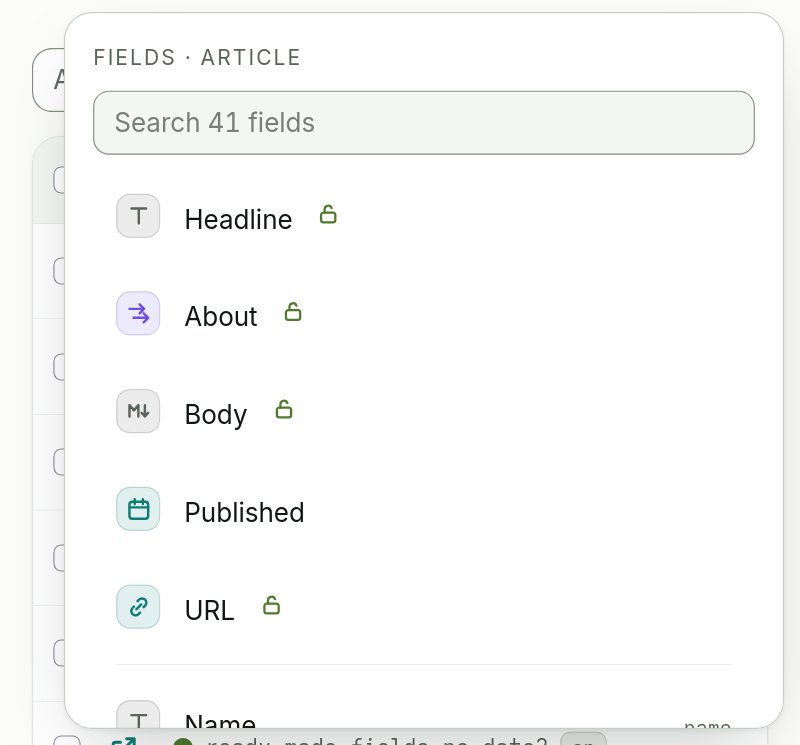
Nothing to type, nothing to invent.
 Skemik
Skemik 1.0 is out
Thirty schema.org types, the same in every install, every field named and typed before you start. Website, shop and assistant read and write the same data at one address.

Model
Person, event, product, invoice: almost everything you keep track of has a known shape. Skemik comes with it, and because the world has agreed on these words, shop, accounting and assistant all mean the same thing by author.
Date2Every field has its schema.org name and its type before you add it. There are no custom types, so the next tool still understands your data.
Nothing to type, nothing to invent.
The same person is author, customer and attendee. Lists replace custom collections, terms replace dropdowns, and a link can know something: “CTO, 2021–2024”.
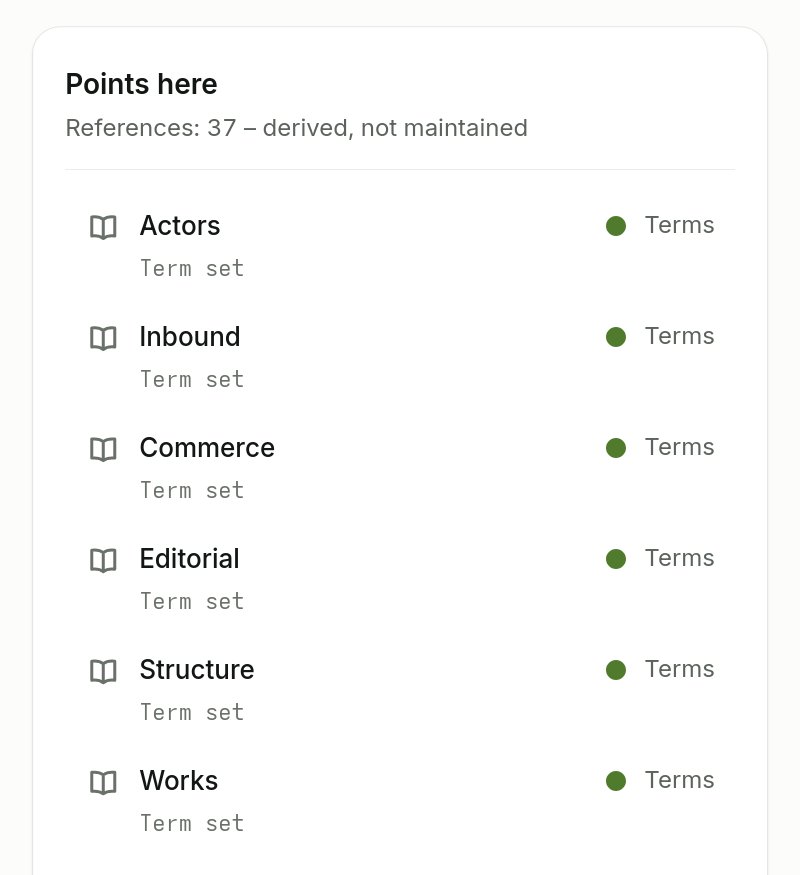
Always see what depends on it.
An article has a record per language, each with its own status; a person is one record with words per language. The twelfth language costs as little as the second.
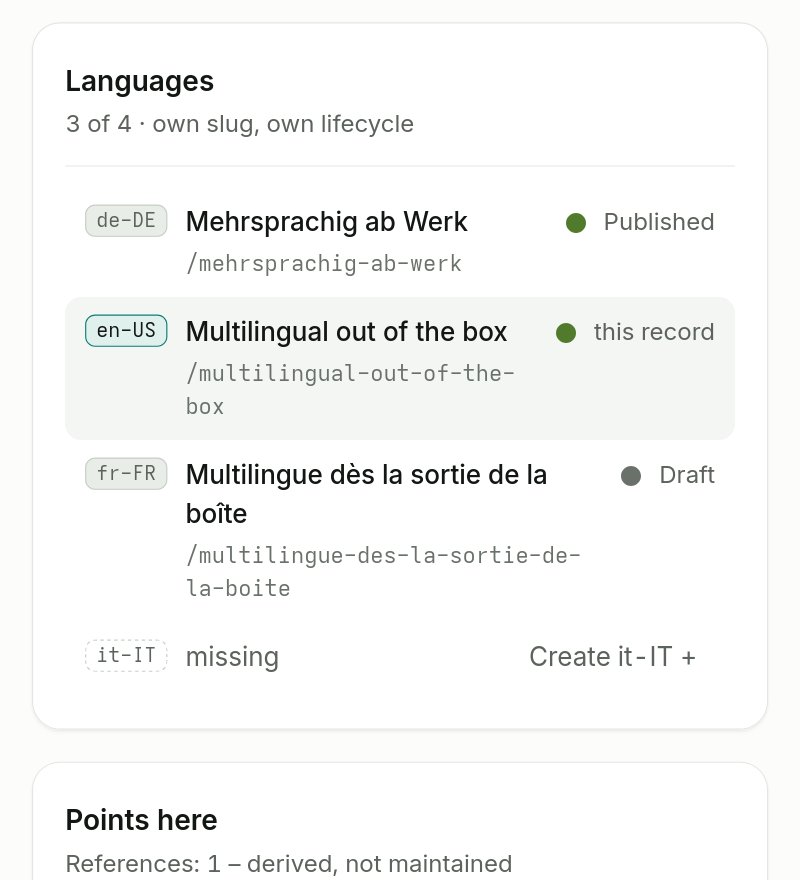
Each language with a status of its own.
Interface
Since every type is known, the interface is there before the first record exists. All there is to set up is which fields a collection carries and which of those go public. Three roles (owner, editor, viewer), login by code instead of a password. The interface speaks English, German, French, Spanish, Italian and Polish, and each person works in their own, whatever languages you publish in. A message, an order, an invoice and a reservation are records like any other – no second system, no plugin.
List, table, cards, grid, timeline: every collection does all five, because the type says what is a date and what is an image. Each edits what it shows in place, the table every field, and in each, ticked records change all at once.
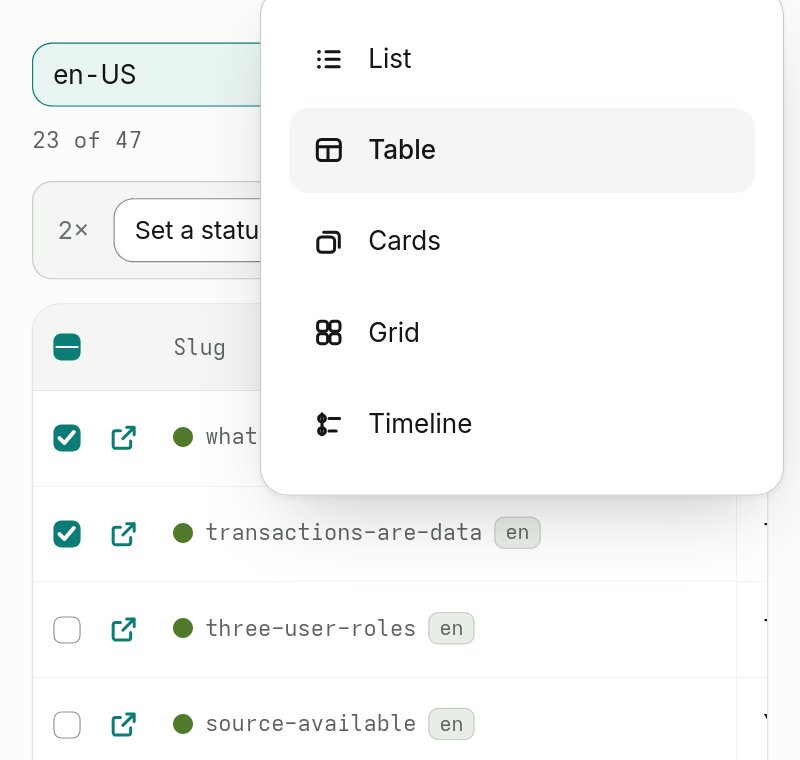
Ticked, and one status for all.
The city goes out, the street stays in. Four states from draft to archived, separate per language for texts such as articles and pages. Scheduled records appear and ended ones disappear on their own.
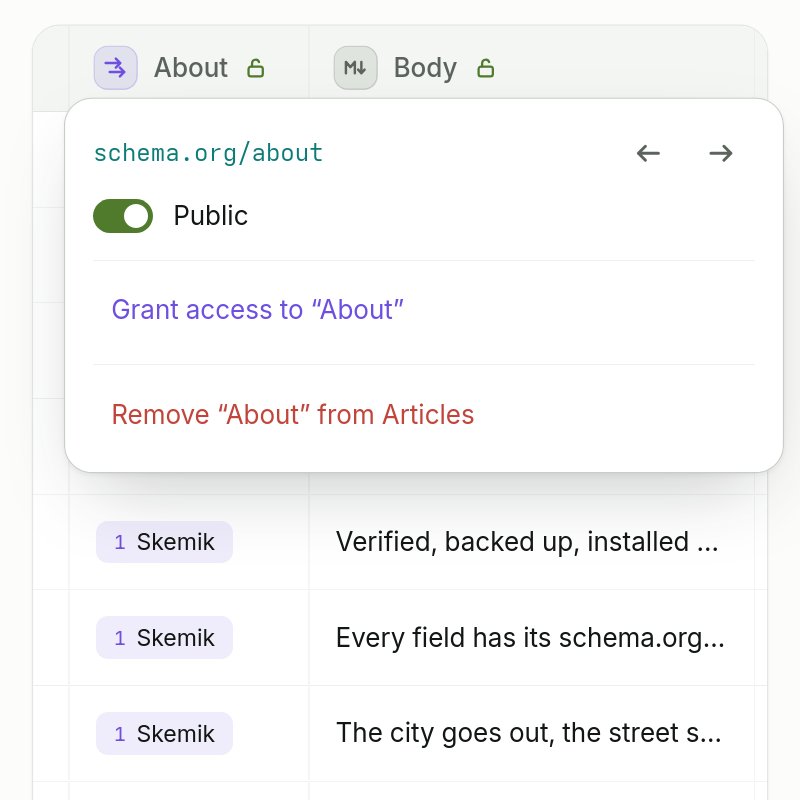
What goes out is marked on the field.
Links to nowhere, missing required fields, old drafts, a key that expires next month, a backup that failed: Skemik looks for these on its own.
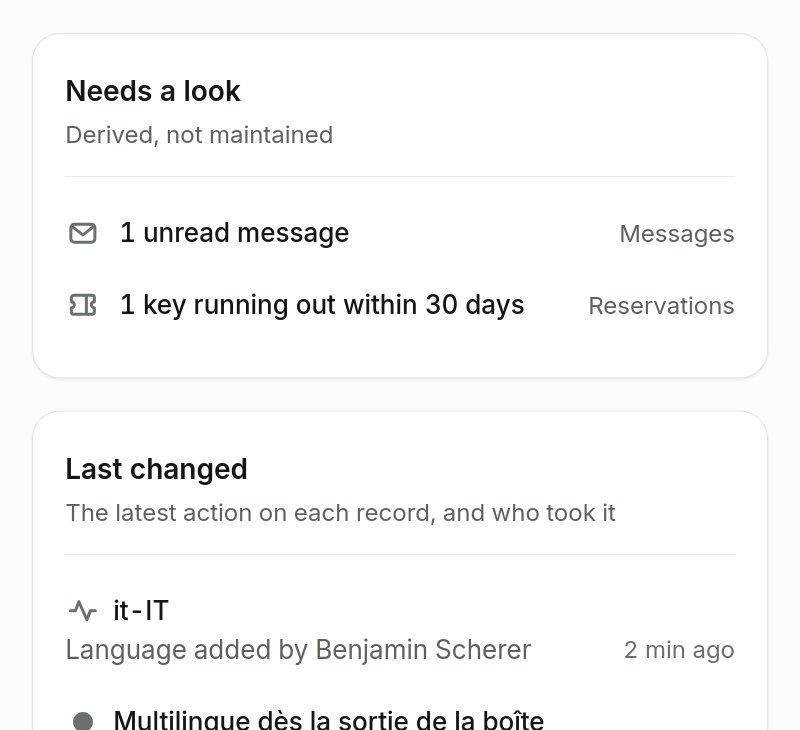
Before anyone notices.
Address
The same collection is there as jsonld, html, csv and md at the same address, filtered and sorted through the address itself. What is published is already out there: no connector, no nightly sync, no copy that drifts from the original.
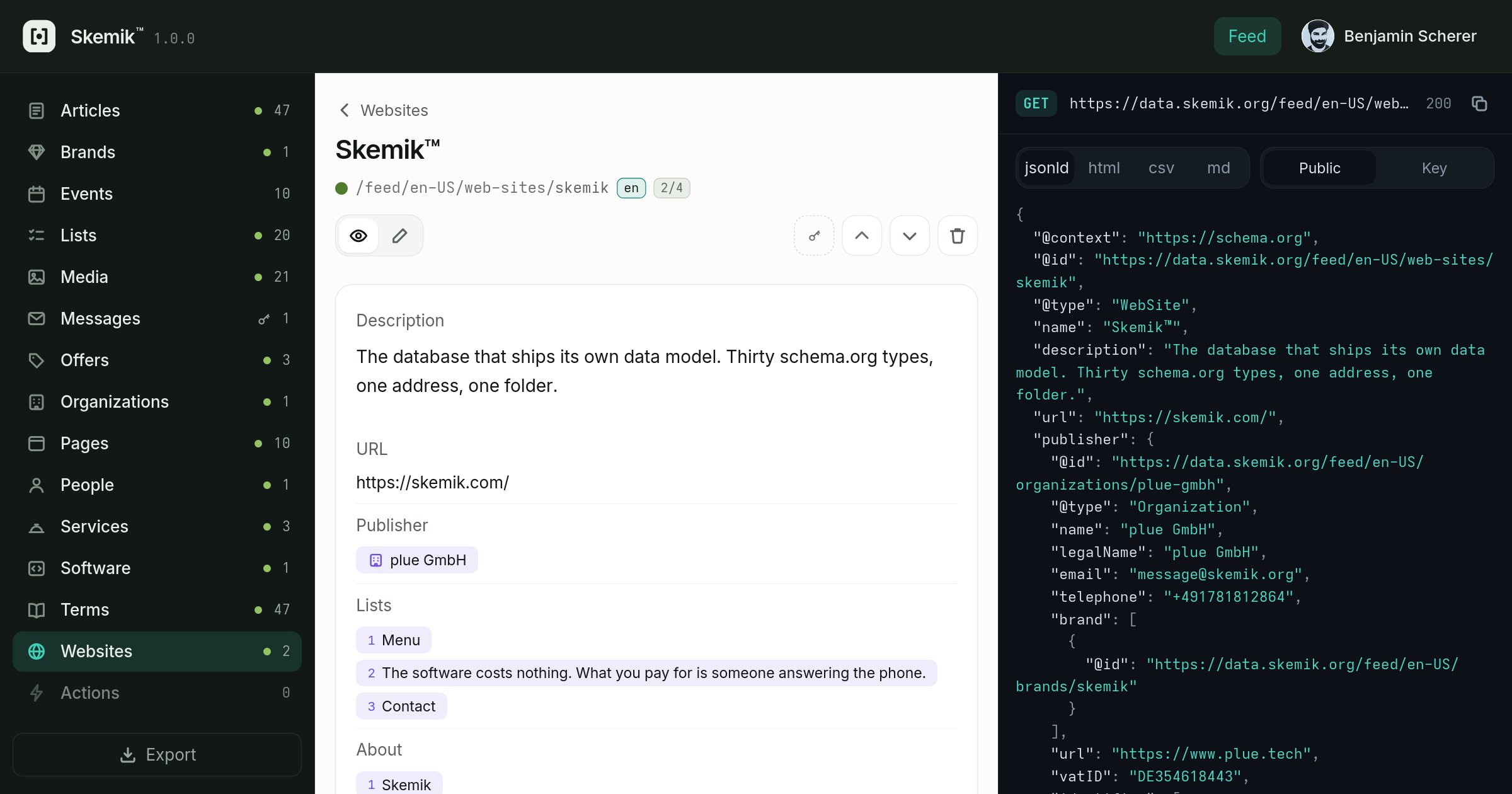
The same record, twice – and a frontend reads it directly, without a library.
Keys
Website, shop and assistant write the same way they read. A machine gets no user account but a grant, and every write is logged under its name. The form creates a message, the point of sale an order, the customer portal reads exactly the records of this one customer: three keys, the same address.
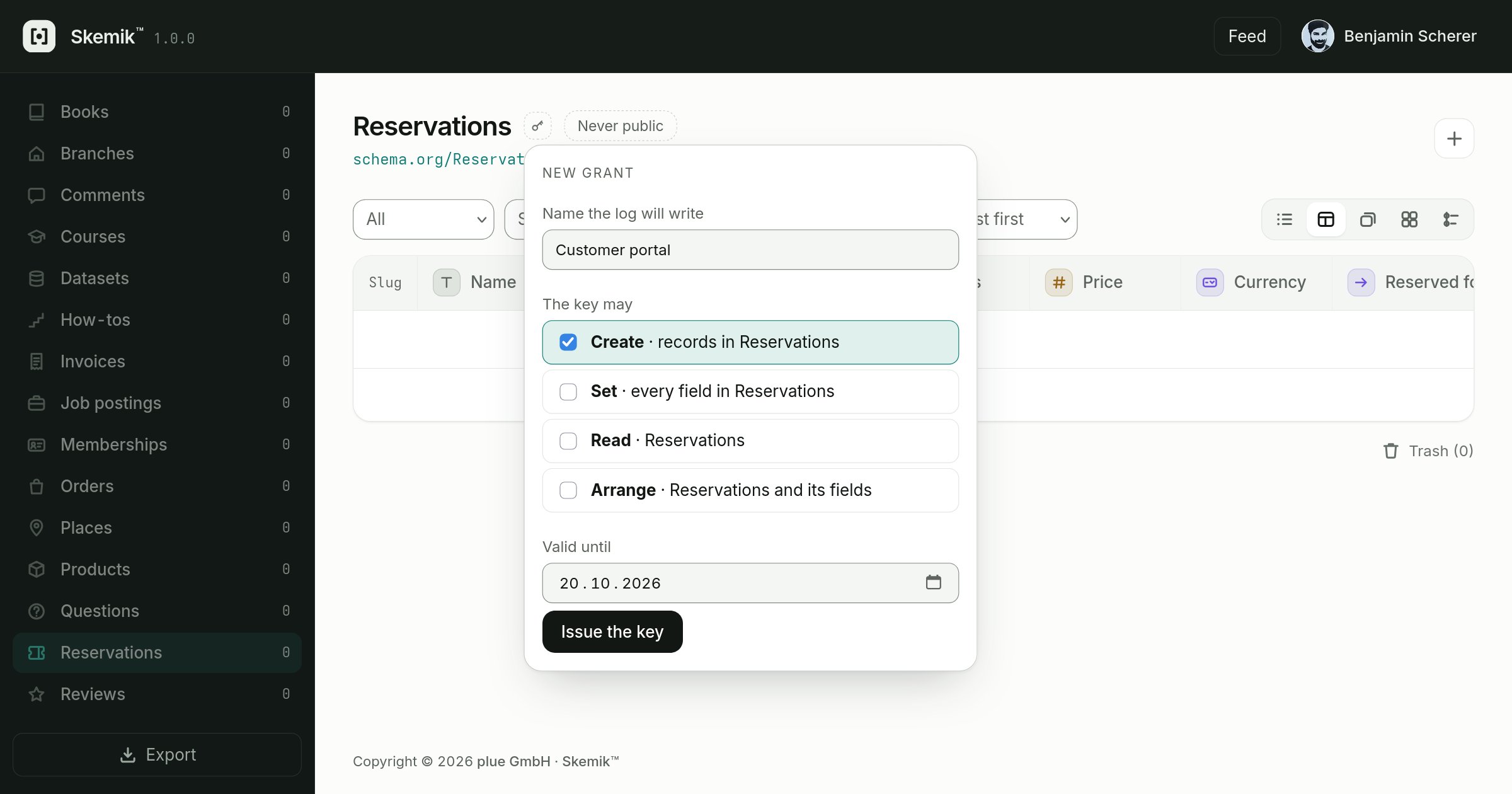
One sentence, one date.
Create, modify, read or configure, and one field or one record only where that is all it needs: “The booking service may create reservations, nothing else.” Every key expires, after two years at the latest, and is narrowed, never widened.
What a machine writes lands as a draft: no key publishes and none deletes. Eighty drafts from one script are one table per collection, ticked and published in one bar.
At /feed/en-US/profile every field of every type is listed: what an event needs, what repeats, what is computed, named in the language you publish in. An assistant reads that, writes drafts, and a person publishes.
Operations
PHP and one SQLite file, installed in a minute. Left out is everything that would otherwise need maintaining or fixing.
The database and the uploads sit side by side. Copying the folder backs it up, moving it is the same, and everything leaves again, files included, in all four formats: a folder that opens in a browser with no server.
Backed up daily, going back around thirty days, without cron and without a daemon. Every version signed, verified and installed on its own; if a migration fails, the previous state comes back.
Your data on your web hosting, no data processor but your host, deleting means deleting. Business Source License 1.1, AGPLv3 after three years: no per-seat pricing, nobody who can switch you off.
Pricing
Agencies install, run and maintain Skemik for any number of clients, free of charge; only hosting offered to the public needs a license from us. The offers are aimed at companies, the self-employed, associations and other organizations, not at consumers. All prices plus VAT.
€0
Run it yourself: download, copy to your web hosting with PHP 8.5, open /install. The full feature set, for any number of users.
– All thirty types, all four formats
– Updates and backups built in
– No account with us
€25 / month
Hosted: the same software, run by us, with a data processing agreement. For organizations that have no web hosting and want none.
– Installation from 5 GB of web space
– Hosted in Germany
– Cancel any month
€1,390 / year
Book support: per installation, run by you or hosted by us. For two people on your team, each additional person €390/year.
– Direct support by email and phone
– Help with mapping your data
– Restoring from a backup
With us: an installation with a data processing agreement, available to pre-order now. On your own: download, copy, open /install.